Sigma
Pendant light Sigma Albert 1 black steel E27 16 cm 32177
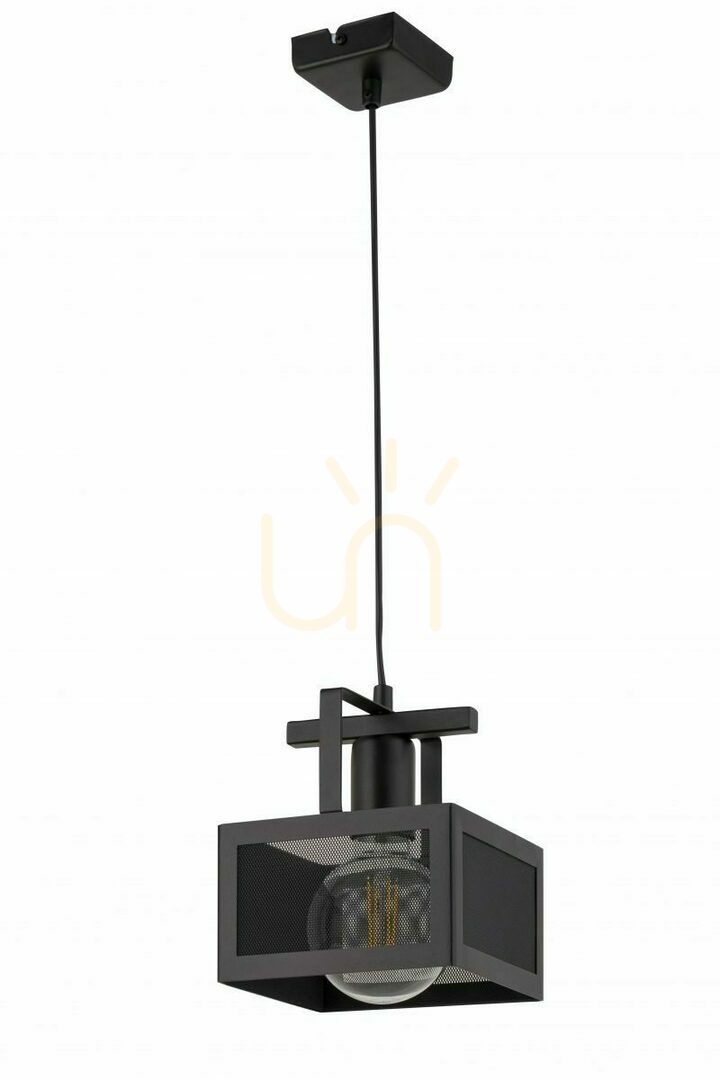
Sigma Albert 1 32177 pendant with a black square mesh cageAlbert 1 places a single exposed bulb inside a compact architectural frame. Fine perforated metal fills each face of the square cage, while black painted borders define its edges. The glass and filament remain visible through the mesh and from the open underside, so the lamp itself becomes part of the composition. Above the cage, crossed horizontal bars and upright supports form a deliberately mechanical connection to the suspension. The result is a small pendant with a recognisable industrial outline rather than a plain socket on a cord.The square shade measures 16 × 16 cm, and Sigma specifies a fitting height of 30 cm. A slim black cable rises to a compact square ceiling canopy. The hanging height can be adjusted during installation. These proportions make the pendant useful as a focused feature over a side table, compact counter or bedside surface. Manufacturer lifestyle images also show identical Albert 1 fittings repeated as a pair, an option for creating a measured rhythm over a longer area. Bulb choice matters visually because the glass is not hidden behind an opaque shade.Choose one replaceable E27 bulbNo light source is supplied. The E27 lampholder allows colour temperature, output and bulb finish to be selected for the intended setting. Sigma permits up to 60 W for a conventional lamp or 15 W for LED. A clear globe with visible filaments reinforces the engineered pattern of the mesh; an opal bulb gives a quieter appearance and conceals its internal elements. The perforated panels soften the side view, but they do not work as a fully enclosed diffuser.Exact SL/32177 specificationbody and shade made from black painted steel,16 × 16 cm square shade and 30 cm fitting height,one E27 lampholder; bulb purchased separately,230 V supply and IP20 rating,adjustable suspension height,designed and manufactured in Poland,2-year guarantee.Isolate the electrical supply before fitting or cleaning. Dust can be removed from the fine mesh with a soft brush or dry cloth, taking care not to press the perforated panels inward.Show more
Offer
All prices incl. VAT; shipping costs per shop feed. The click takes you directly to the shop's product page.
Price history (lowest price)
2026-07-23 – 2026-07-29min €40.90 · max €40.90
Product details
- Brands
- Sigma
- GTIN
- 05907554414268
- Categories
- Home & Garden > Lighting > Lighting Fixtures > Chandeliers


