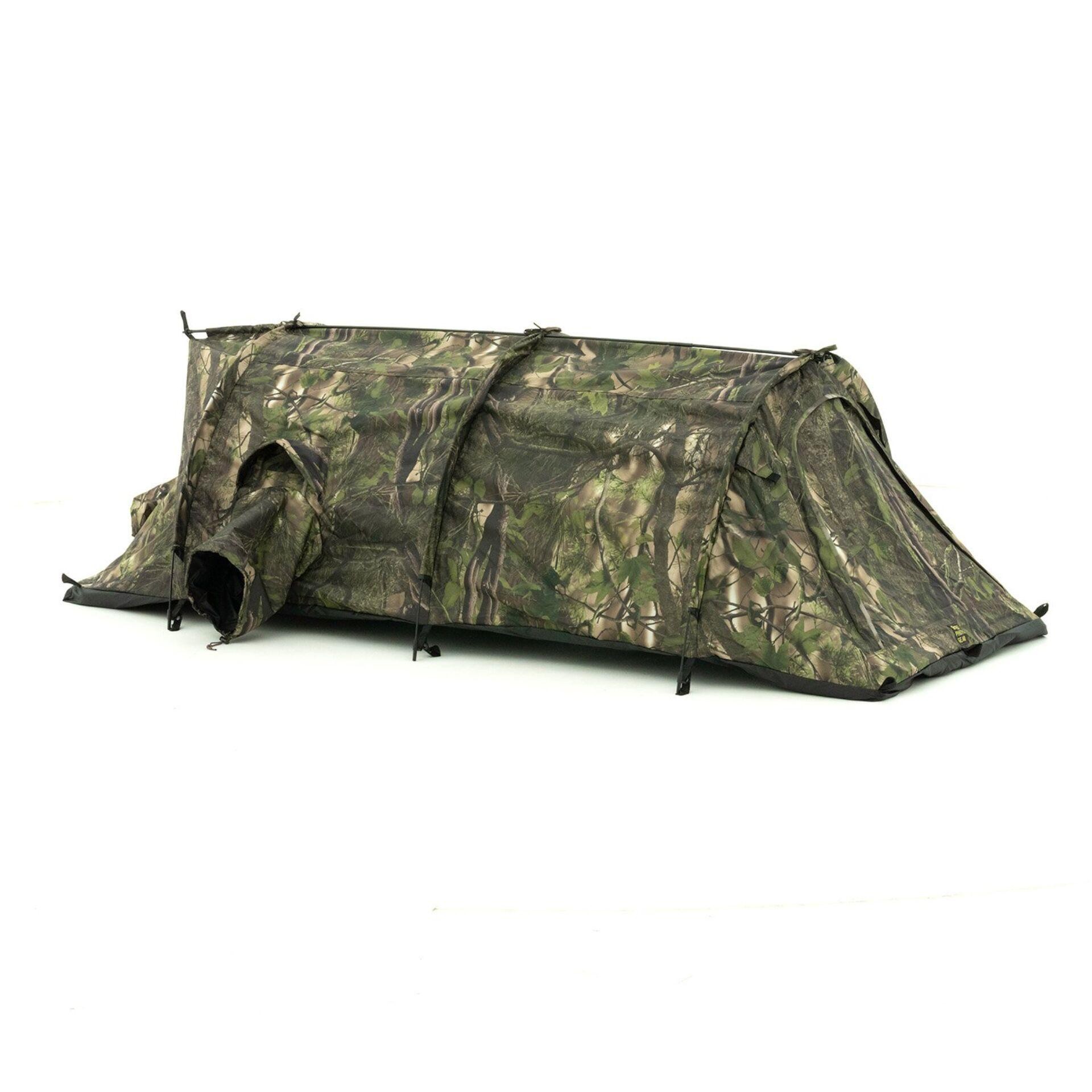
Nature Photography Photo hide Falco Mark IV Green is a compact yet perfect, one-person, low level photography hide. Easy and quickly to set up and fold down. The new photo hide Falco Mark IV is equipped with no less than 3 photowindows, each with a fixed snoot. So with this tent, you do not need to purchase additional loose snoots. To seal everything properly we have attached the snoots. This new hide is the must-have for nature and wildlife photographers who love low level photography. Developed by nature photographers The hide was developed by nature and wildlife photographers: Extensively used, tested and adjusted where necessary. The Falco Mark IV is thé single-person camouflage photo hide for low level nature photography that we offer in 3 camouflage patterns. Perfect camouflage Camouflaging yourself and your gear with a camouflage hide is the best solution for successful wildlife photography. With the Falco Mark IV hide, you are quickly and perfectly camouflaged, and you will photograph more effectively and perfectly at low level. Due to its small size, the tent can be placed inconspicuously and easy be camouflaged extra with branches, leaves, reeds etcetera. The Falco Mark IV is a great camouflage hide, and also has the option of attaching additional camouflage such as branches, leaves, reeds etcetera. These extras can be attached using the strings. If you do this properly, your hide will blend in even more with the area and that is exactly what it is meant to do! Another possibility is to use an extra camouflage net, please feel free to check our page camouflage nets. Make sure you still have a good and clear view with your camera at all three sides! Easy, quick and mobile The advantage of having your own nature photography hide is that you can take it with you anytime, anywhere and deploy it quickly when an opportunity arises. Lightweight and compact in size, this photohide for nature and wildlife photography is easy to take with you, and set up fast because of the simple lightweight construction with the 3 fiberglass half hoops. Prepare and pitch If possible, make use of existing vegetation, so that your photo blind becomes one with its surroundings. Set up your hide preferably a few days beforehand so that birds and mammals get used to it and you waist no time once you enter the area. The tent can be secured extra with the guy ropes provided, although this will not be necessary very often. The tent fabric itself is made of a strong, waterproof material (polyester 150D, Hydrostatic Head of 2.500 mm) that will last for a long period. The photo hide is perfect for use for short periods (up to several months). For a little extra comfort, a fitted groundsheet can be useful. This can be used both under the tent and inside the tent. Taking photos from the nature photography hide The door has a high quality zipper which runs the other way than in the previous version, again to prevent any rainwater from entering. It is additionally camouflaged equipped with an insect screen in the same camouflage print. So the photohide with the door (slightly) open is still perfectly camouflaged. The entrance can also be used as a viewing window or to let in fresh air if desired, by open it somewhat. Once inside the tent, youll see that it is very dark because of the black coating on the inside. At the front youll find three lens openings: Front, left and right. We recommend taking the snoots to the inside and tightening them there with the attached cord. This way, you can always open these snoots and use the photowindows once you are inside the tent, while keeping it all watertight sealed. When you leave the tent, it's better to leave the snoots hanging outside which allows rainwater to drain off smoothly. The hide has just enough space on the inside for you, your groundpod or tripod with your photo gear mounted, and a photo backpack or bag. The viewing windows with an insect net on all sides give you enough visibility to keep an eye on the surroundings. We advise you to use a groundpod because of the space, low level and it can be placed completely inside the tent. A (small) tripod of course is possible, in that case put one leg outside the hide, using the small zipper at the front (low). If not used, this zipper is covered from the outside to keep it fully closed. By extending the tripod leg, your camera will be positioned further forward, which is more convenient when panning left and right. The use of a ball head is recommended as it takes up little space. We offer special ball heads (Flex Shooter) that take up little space but keep the lens stable, making them perfect for this purpose. Large tripod heads can hit the tent fabric when swivelling, which may scare off birds or mammals. So, if you're looking for the perfect low level, nature & wildlife photoMeer tonenMinder tonen